November 3, 2026
Navigating Keyboard and Piano Sales: A Buyer's Guide for Musicians
By @keyboardpianosaleslife
Buying a keyboard or piano is rarely a simple transaction. Whether you are a producer hunting for the perfect MIDI controller, a classical pianist looking for an acoustic upright, or a synth enthusiast chasing that specific analog sound, the process involves more than just swiping a card. The market for keyboard and piano sales has grown more complex and more interesting over the past decade, with new digital options, a thriving secondhand ecosystem, and a renewed appreciation for vintage gear. Understanding what is out there and how to evaluate it will save you money and frustration.
Start with Your Real Need
The first question is not "What can I afford?" but "What am I trying to do?" A stage piano meant for live performance has different action, different connectivity, and different durability than a home digital piano. A synthesizer with a keyboard bed is a different tool than a weighted 88-key controller. And an acoustic grand from Steinway & Sons is a different instrument entirely from a Casio portable. Each has its place, but you need to match the tool to the job.
If you are a gigging musician carrying gear to clubs every weekend, weight and reliability matter more than a perfect simulated grand-piano feel. Something like the Roland RD series stage piano is built for that life. If you are setting up a home studio for production, you might care more about aftertouch, velocity curves, and how well the keyboard integrates with your DAW. A MIDI controller from Korg or a compact synth-action board might serve you better than a heavy slab with built-in speakers. And if you are a teacher or a student practicing at home, a Yamaha or Casio digital piano with graded hammer action and built-in lessons could be the right call. There is no universal best, only the best fit for your context.
New vs. Used: The Real Trade-Offs
The secondhand market for keyboard and piano sales is massive and often undervalued. Platforms like Reverb and local classifieds are full of gear that was lightly used and is now available for half the retail price. But buying used requires patience and a willingness to inspect. A digital piano with a worn key contact strip or a synth with a flaky power supply can become a money pit. On the other hand, a well-maintained Yamaha P-series stage piano from five years ago performs almost identically to the current model. The same goes for many Korg workstations and Roland synths.

Acoustic pianos are a different story. A used Boston Piano or Steinway upright that has been properly serviced can be a fantastic value, but moving it, tuning it, and maintaining it adds hidden costs. If you are not prepared for that, a high-end digital like a Nord Piano might give you the feel you want without the ongoing expense. The trade-off is tactile: nothing replicates the resonance and dynamic range of a real acoustic action. But for many players, especially those recording or using headphones, the convenience of a digital wins out.
What to Look For in a Keyboard or Digital Piano
Here are the key factors to evaluate when you are shopping:
- Action and feel. Weighted keys with graded hammer action are essential if you plan to transition to an acoustic piano. Non-weighted synth action is fine for organ or lead synth parts but will not build proper finger strength.
- Sound engine and polyphony. A good digital piano should have at least 128-note polyphony and a sampled sound engine that responds to velocity. Cheaper models cut off notes or sound thin in the upper register.
- Connectivity. USB-MIDI, audio outputs, and Bluetooth MIDI matter if you plan to record or use software instruments. A stage piano without proper outputs will limit your live setup.
- Build quality and portability. If you move the instrument frequently, look for a metal chassis, robust keybed, and speaker design that can handle bumps.
- Resale value. Brands like Yamaha and Roland hold their value better than many entry-level brands. If you think you might upgrade in a few years, that matters.
Do not ignore the used market for high-end controllers. A few years ago I picked up a used Moog synthesizer with a keyboard bed from a seller on Reverb for about sixty cents on the dollar. The unit was mint. The seller just needed space. That kind of deal is common if you set alerts and act quickly.
The Rise of the Synthesizer and Workstation
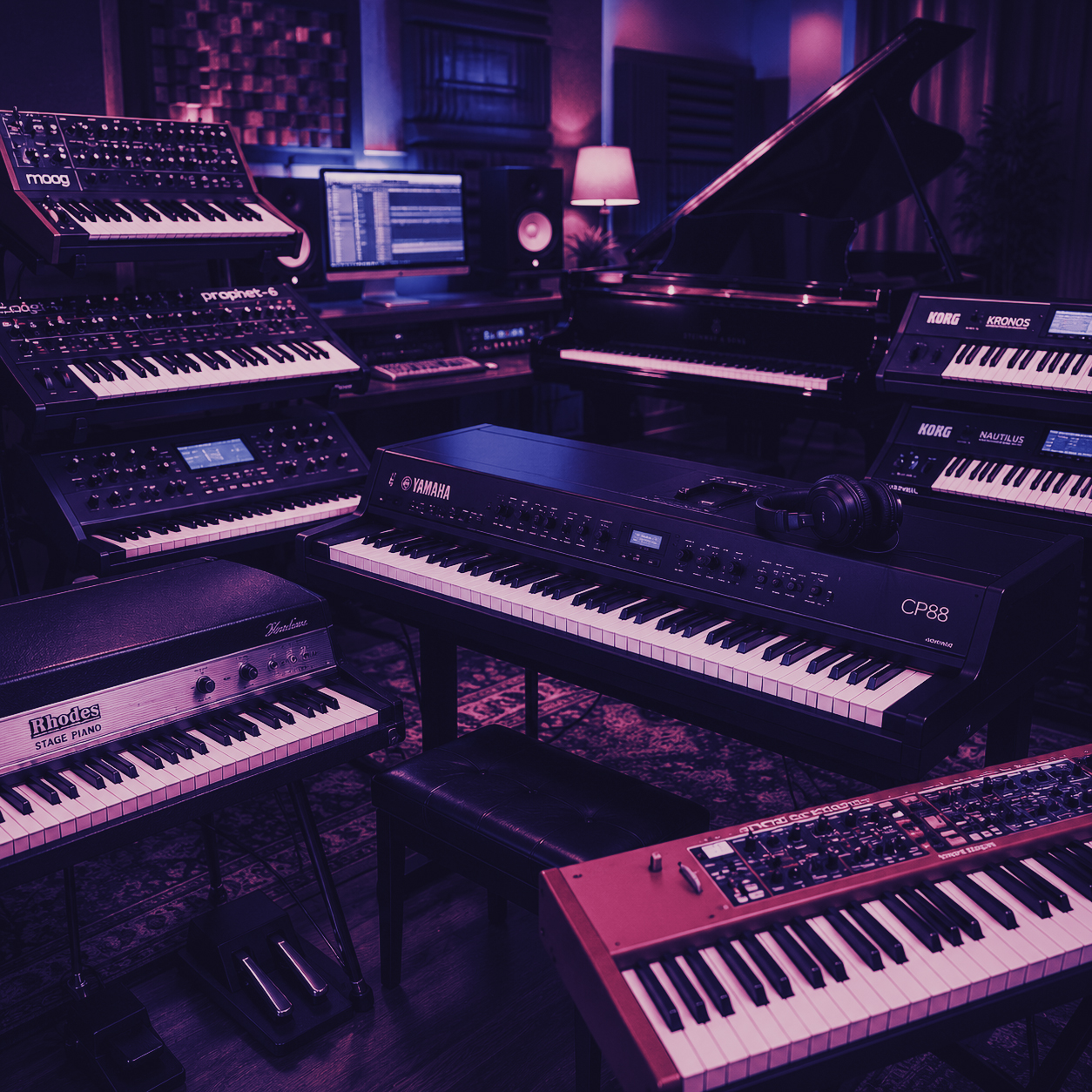
The line between a keyboard and a synthesizer has blurred. Modern workstations from Korg and Roland are essentially all-in-one production studios with sequencers, effects, and multitrack recording. They are not just keyboards; they are instruments for composition and performance. At the same time, dedicated synthesizers with keyboard interfaces have become more accessible. The Moog Subsequent series and the Korg Minilogue XD are examples of gear that appeals to both keyboard players and synth enthusiasts. If you are new to synthesis, a keyboard with built-in virtual analog engines can be a gentler entry point than a modular rack.
But beware of feature bloat. Many keyboards in the midrange pack in hundreds of sounds, auto-accompaniment rhythms, and built-in speakers that are mediocre. You are better off buying a simpler instrument with great sound engine and adding external gear later. A Yamaha CP series stage piano with a dedicated monitor speaker will outperform a do-it-all keyboard with built-in speakers every time.

Where Prices Are Headed
The overall trend in keyboard and piano sales is toward higher quality at lower price points for digital instruments. Casio has pushed the price of a decent weighted 88-key digital under $600, which was unthinkable a decade ago. At the same time, the high end of the market has expanded. Nord Piano and Steinway & Sons still command premium prices, but the gap between a $1,000 digital and a $5,000 digital is narrower than it used to be in terms of feel and sound. The real leap happens when you go from a $500 keyboard to a $1,200 stage piano. After that, diminishing returns set in until you hit the stratospheric prices of acoustic grands.
If you are buying new, retailers like Sweetwater, Guitar Center, Music & Arts, and Thomann offer competitive pricing and often have open-box or floor-model discounts. Do not be afraid to ask for a deal, especially on floor models. I have seen a Roland FP-series stage piano discounted by nearly 30 percent just because it was the display unit. The warranty was still intact.
Acoustic Pianos: A Different Commitment
An acoustic piano is not an appliance you can return easily. If you are considering a Steinway & Sons upright or a Boston Piano, bring a technician with you to inspect it. Check for cracked soundboard, loose tuning pins, and worn hammers. The action should be even across all 88 keys. A piano that has been neglected can cost more to restore than it is worth. At the same time, a well-maintained used acoustic from a reputable brand can be a lifetime instrument. The feel and dynamic control are unmatched by any digital. But you need the space, the budget for tuning twice a year, and the tolerance for humidity changes. If you have all three, an acoustic is worth the investment.
For many musicians, the sweet spot is a hybrid: a digital piano with a real wooden action and sampled sounds from a concert grand. Yamaha, Roland, and Casio all make hybrids that sit in that middle ground. They are heavy and expensive, but they give you the touch of an acoustic without the maintenance.
Final Thoughts on the Process
The market for keyboard and piano sales is fluid. New models come out every year, but the core question remains the same: does this instrument help you make the music you want to make? Do not let marketing hype or a flashy feature list distract you. Play the instrument if you can. Read reviews from people who use it in a similar context. And be honest about your skill level and your ambitions. A beginner does not need a $2,000 stage piano, but a serious student will outgrow a $300 keyboard in six months. Spend where it matters: action, sound engine, and connectivity. Everything else is negotiable.
Whether you are browsing Reverb for a vintage synth, checking Sweetwater for a new MIDI controller, or visiting Guitar Center to try a digital piano, the same principle applies. Know your need, set your budget, and do not rush. The right instrument will reveal itself when you stop looking for a deal and start looking for a match.
❧